

In this post, I will go over how to frame the roof. When I set out to frame the roof I considered this the pinnacle of my carpentry experience. For the amateur carpenter like myself, this was no easy task. Despite this, by the time I got to this point in my cabin build, I was ready to tackle this process. The basic process goes like this: brace your ridge board, layout 1 rafter, test fit, and adjust, then trace the rafter on the rest of your rafters. The roof pitch for our cabin is 8/12, I used a 2” x 8” for my ridge board. For the rafters, we ended up using rough cut true 2”x 6” rafters. My fiancé’s Grandpa milled a downed tree for us to use. Standard 2”x6” boards will work just the same for this design. Buckle up. This is a fun one.
- Calculate the height where the bottom of your ridge board will fall. Use the span of the structure, the roof pitch angle, and the Pythagorean Theorem to calculate this. If you have a set of my free 12’ x 12’ Cabin plans, this dimension is listed on the rafter page, no calculation is needed.
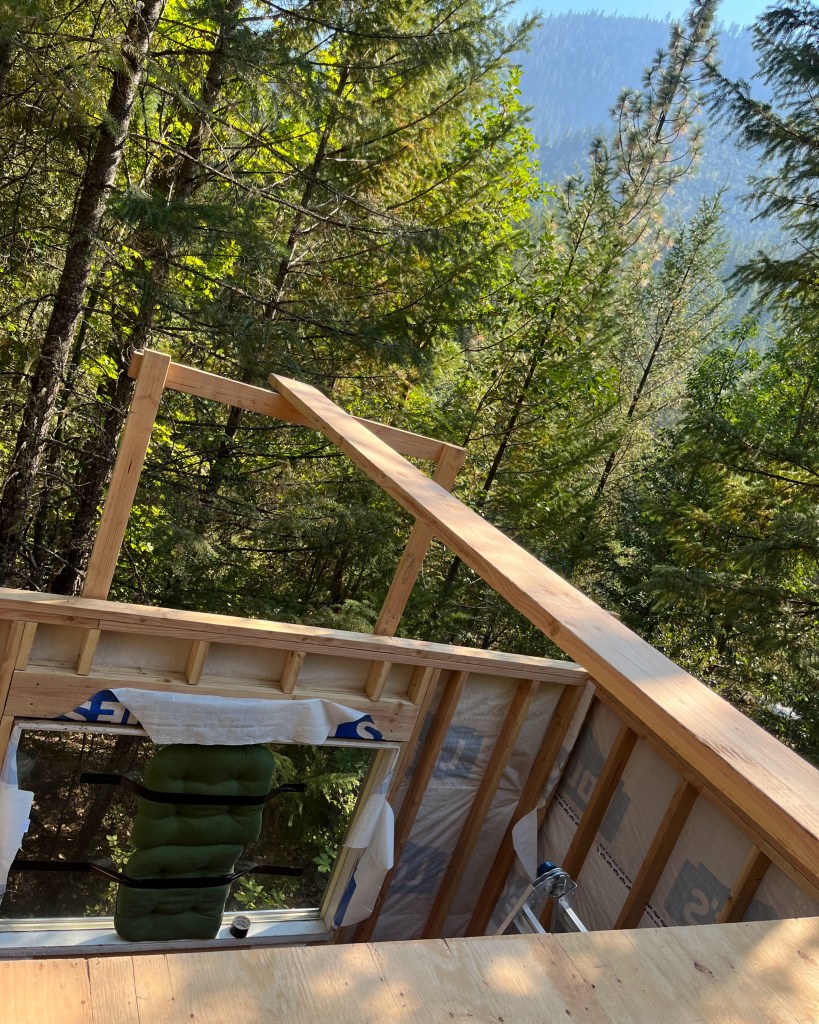
- Make a brace to support your ridge board to this height. I did this with scrap 2” x 4.” Double check that the ridge board is at the correct height and center it on the structure.
Rafter layout:
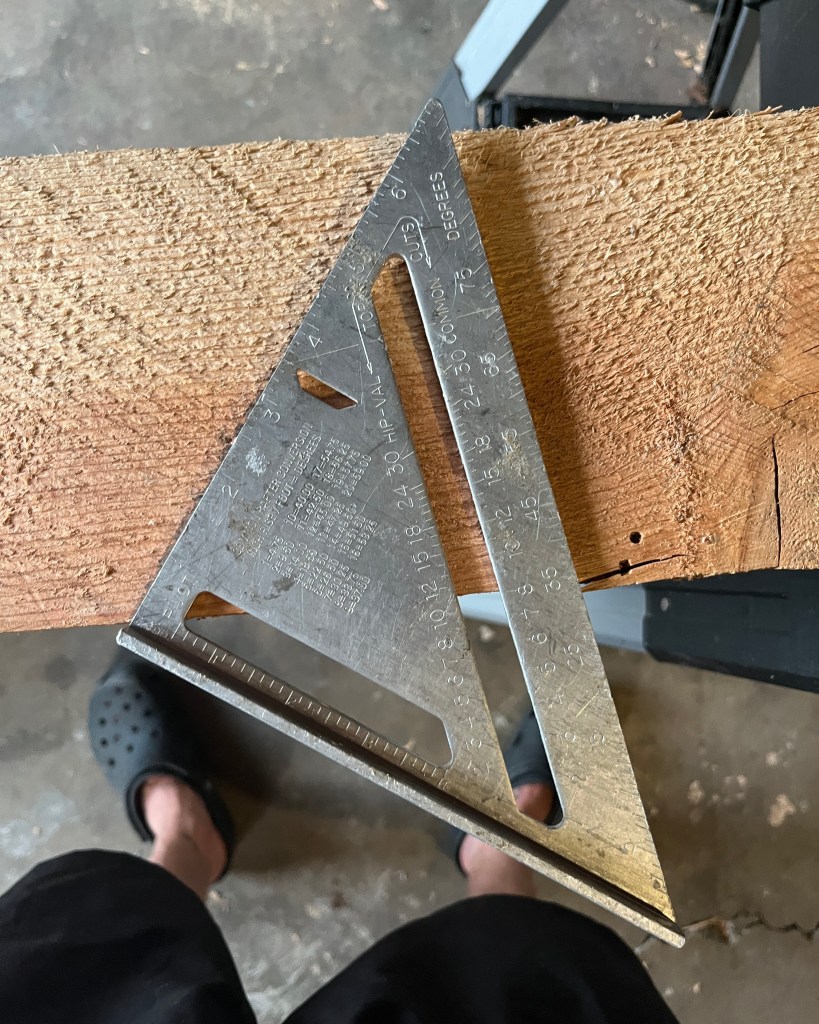
3. Mark your top cut by placing your speed square on the bottom of the rafter. Then, pivot the square over towards the right, stopping on the appropriate common rafter mark. Mark this line.
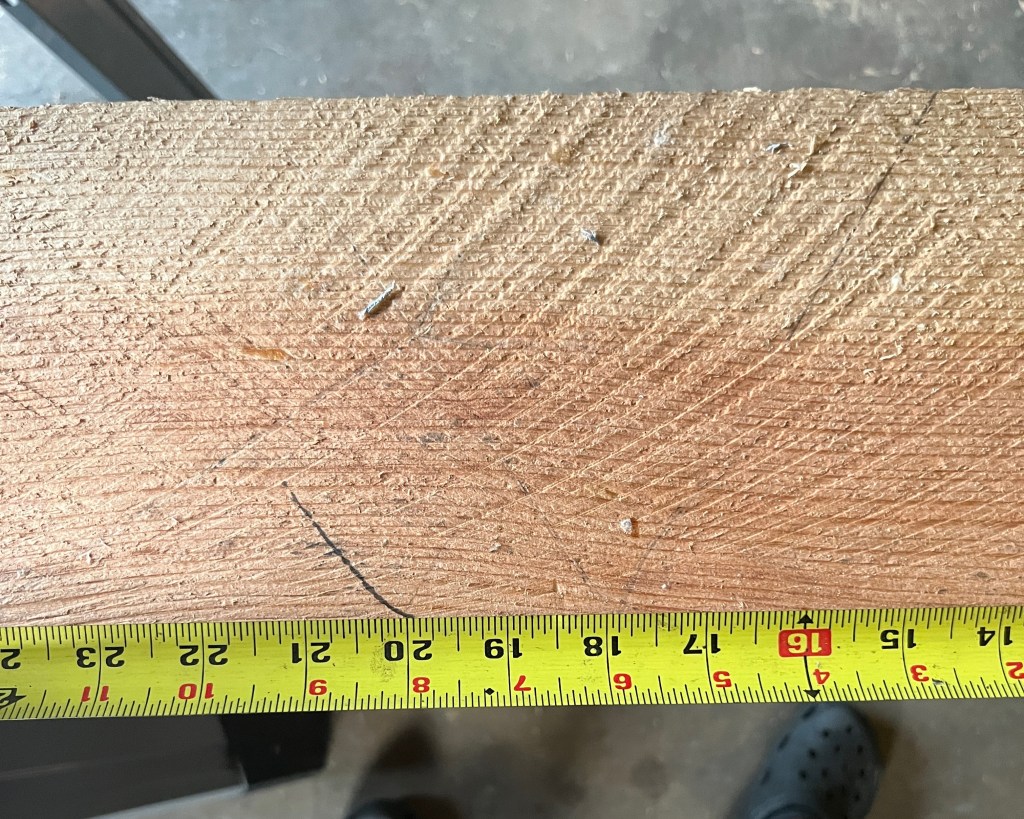
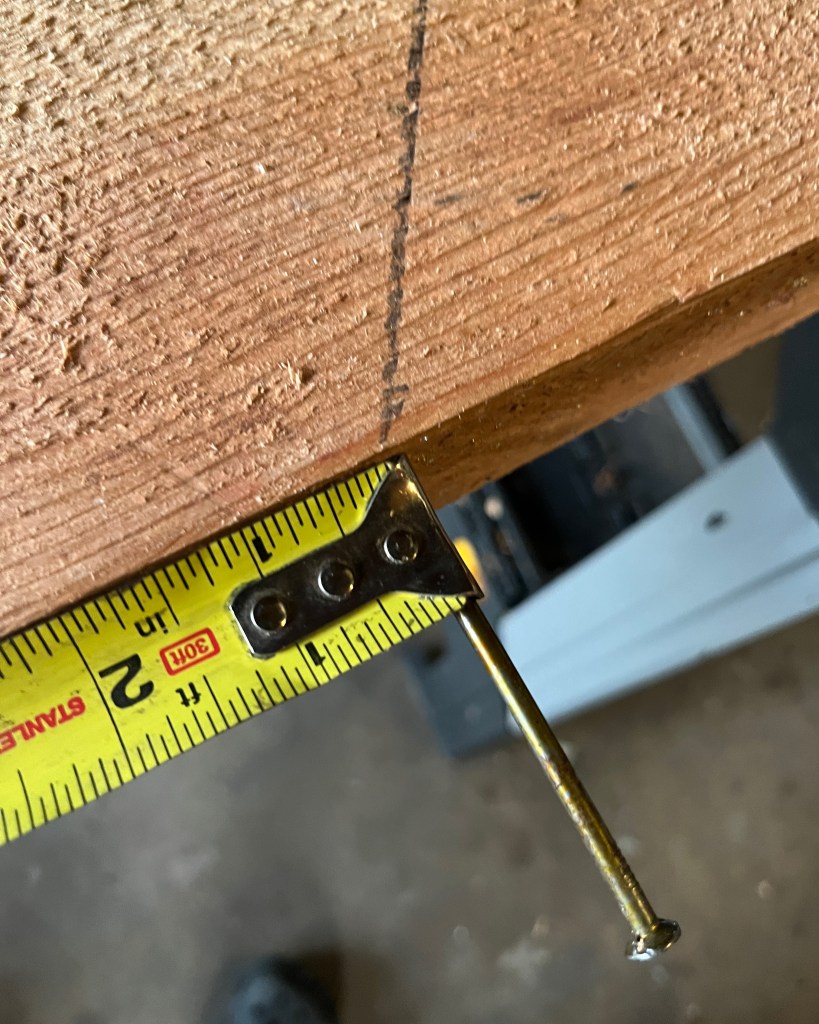
4. Measure where the bird’s mouth of the rafter will start (closest to the overhang). You can get this dimension using the Pythagorean theorem or referencing a set of plans. Pull from the bottom of the rafter, using a temporary nail can give your tape measure something to hang off.
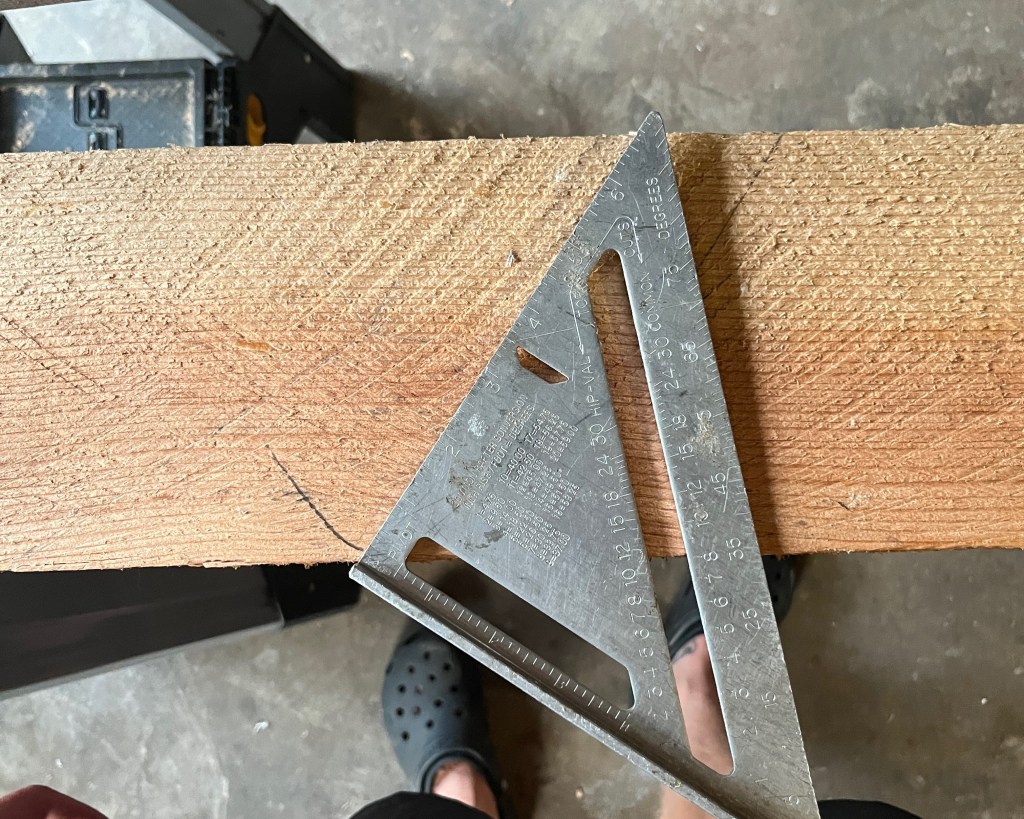
5. Use your speed square and pivot to the right from this point and draw a line.

6. Mark the depth of your bird’s mouth cut. This dimension is your top plate width + any sheathing. Put the bottom of the square on the angled birds mouth cut, and line up the depth dimension with the bottom of the rafter.
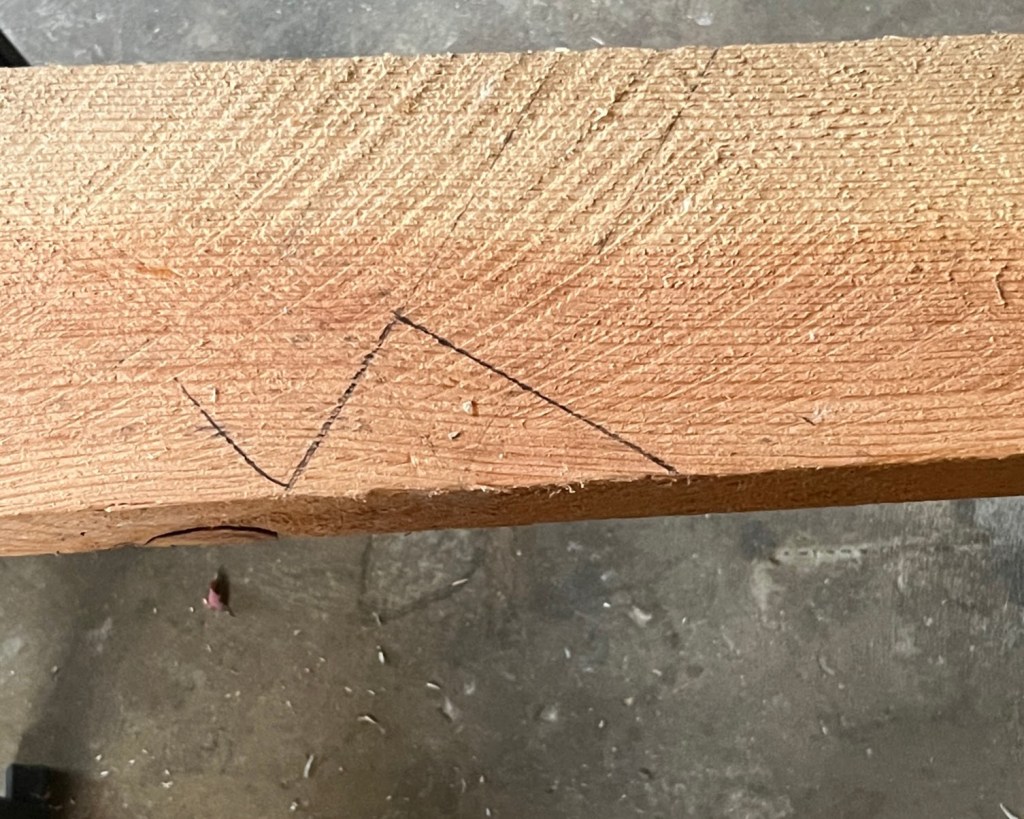
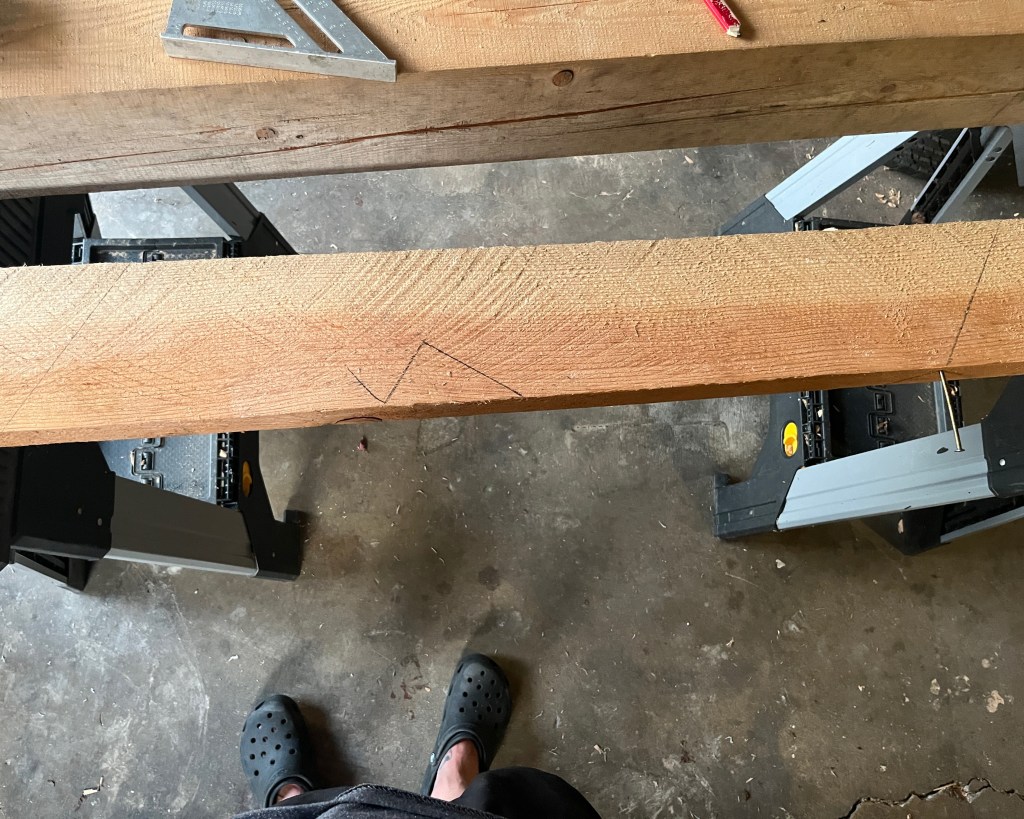
7. Measure down to your desired overhang, and mark and cut the rafter the same way as the top cut.
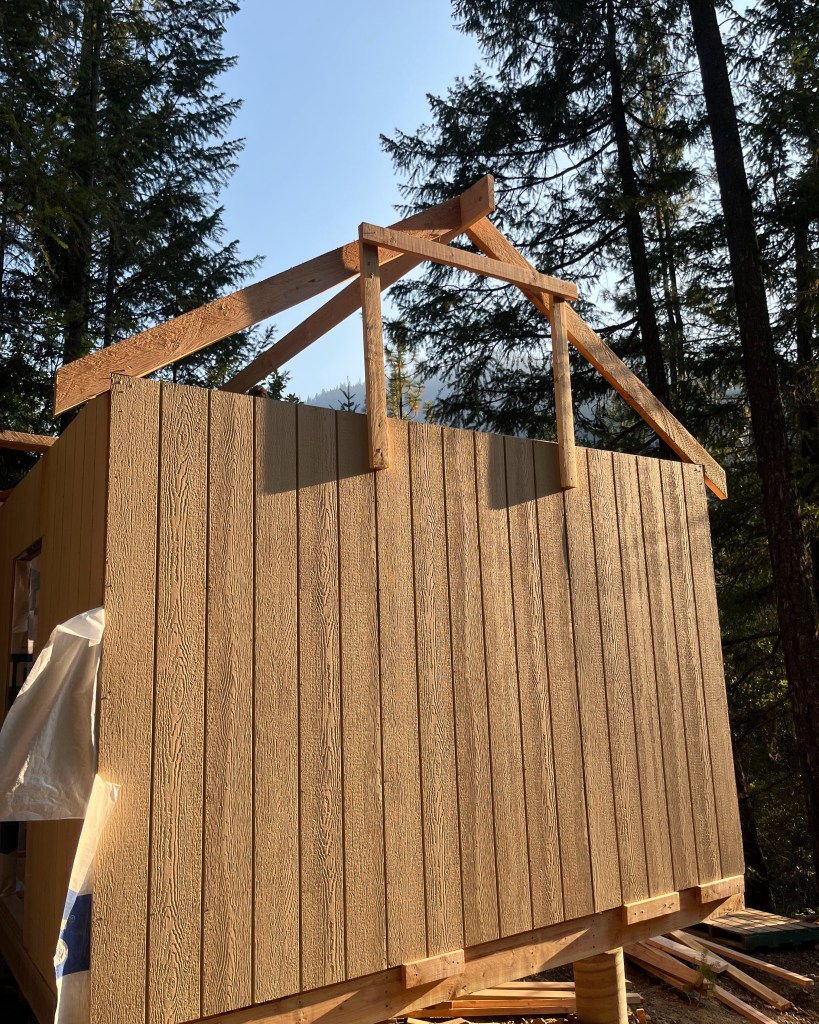
8. Test fit the rafter. Make adjustments as necessary. The first time I test fit my rafter I did not get a perfect fit. Take your time. This rafter will be the template for the rest of your rafters.
Note: Make sure you test fit the rafter on both sides of the ridge board. If you are building the 12’x 12’ Cabin, it should be symmetrical. However, stuff happens, and if you have to make two rafter templates for each side, it is not the end of the world.
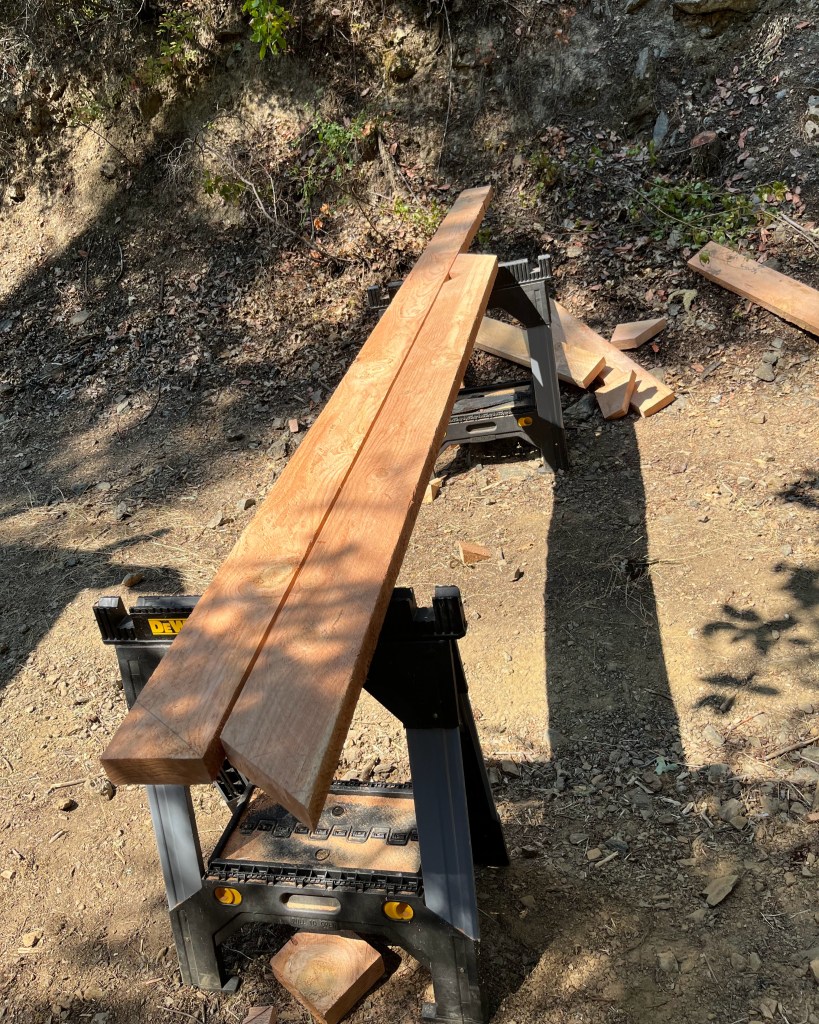
9. Trace the test fit rafter on the rest of your boards and cut your rafters.
- Layout the rafters 24” OC. Refer to the plan, or use the OC Layout method discussed in the floor framing article.
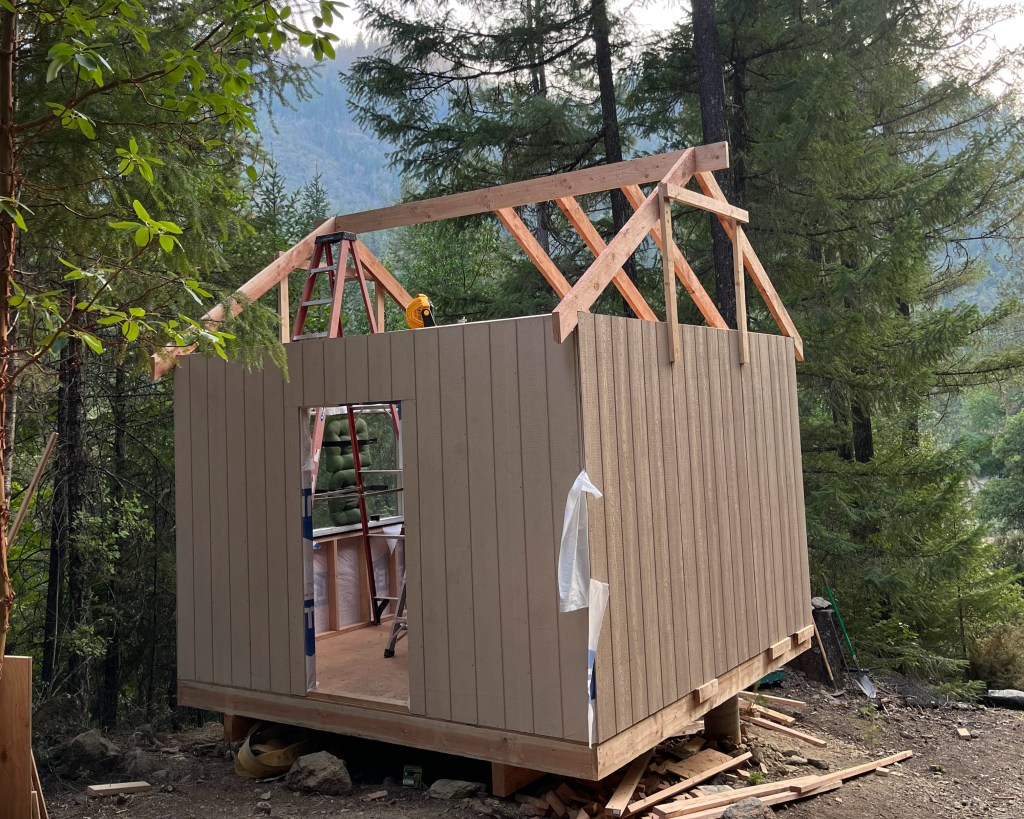
11. Place and nail your rafters in. Some of these will be toenailed.
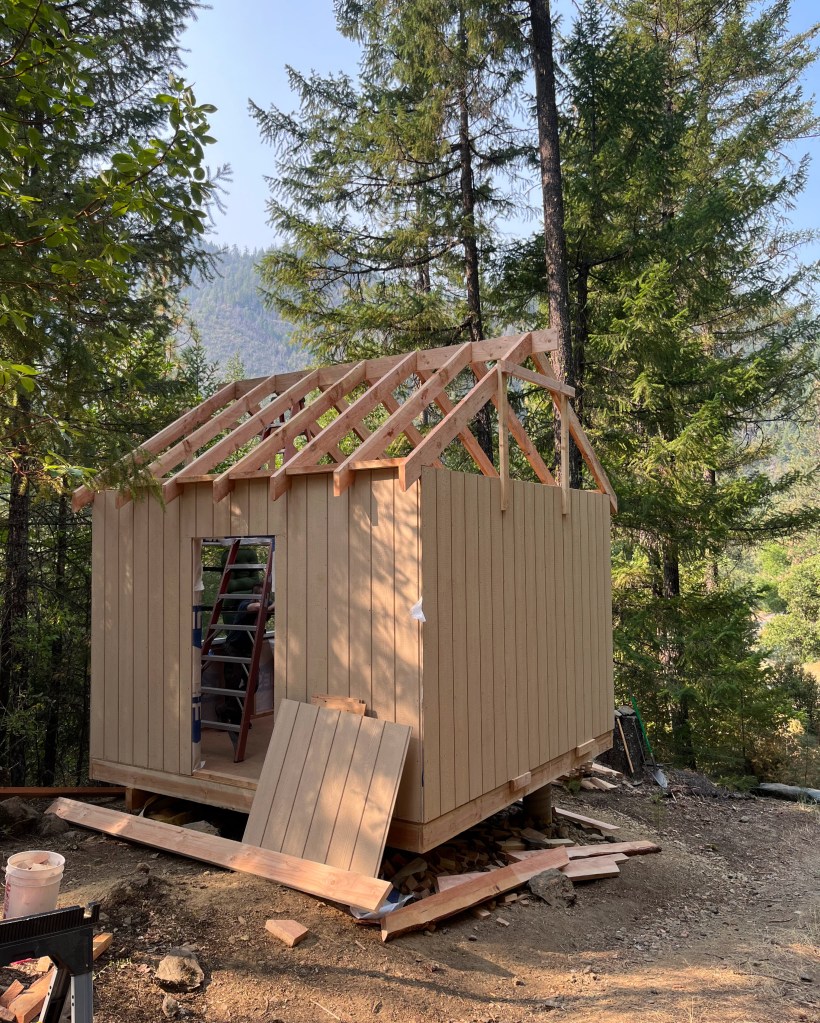
12. Remove the braces holding up the ridge board.
13. Add on your fascia board.
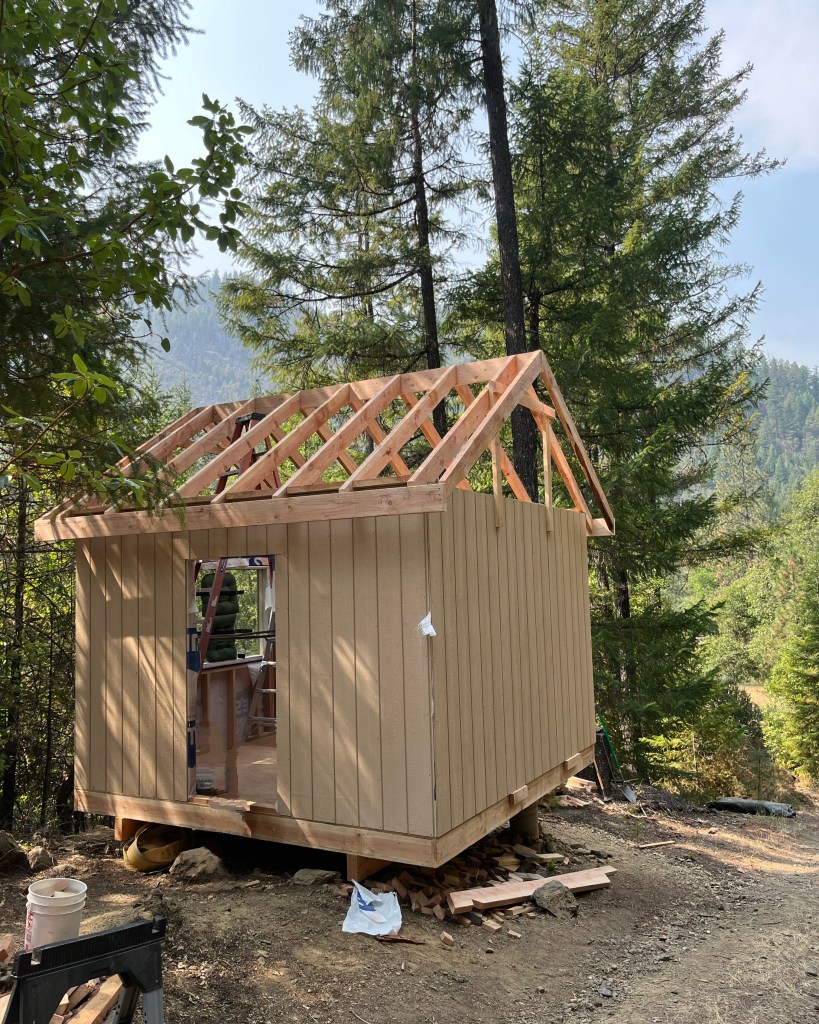
You now have a framed roof! Take a step back and soak it in. This is a big accomplishment.
14. Sheathe the roof. Similar to hanging wall siding, it helps to have blocks to rest the sheathing against. Nail using 8D nails every 12”-16”. Make sure to offset the full/cut pieces of plywood. Leave a nail thickness between each horizontal piece of sheathing, this helps relieve tension for wood expansion.
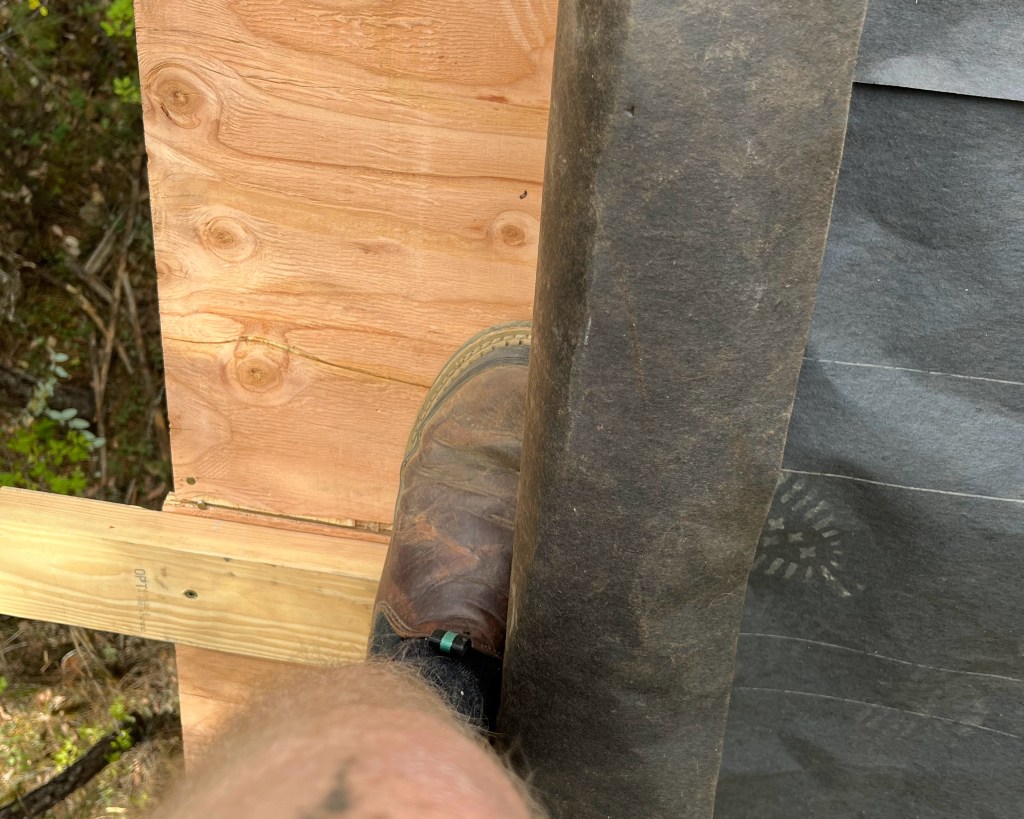
Tip: don’t hesitate to screw in 2”x4” footholds in order to walk on. Make sure these are screwed into the rafters, and not just the sheathing.
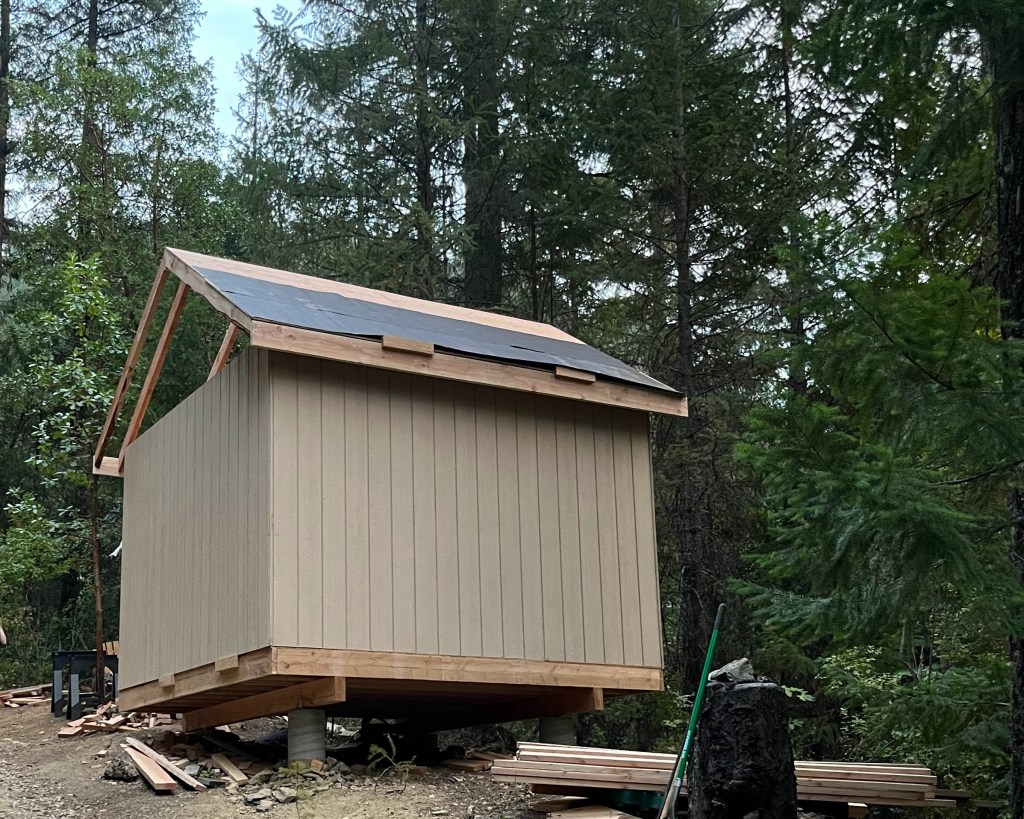
15. Lay Down and overlap roofing felt. Use a staple gun to attach it.
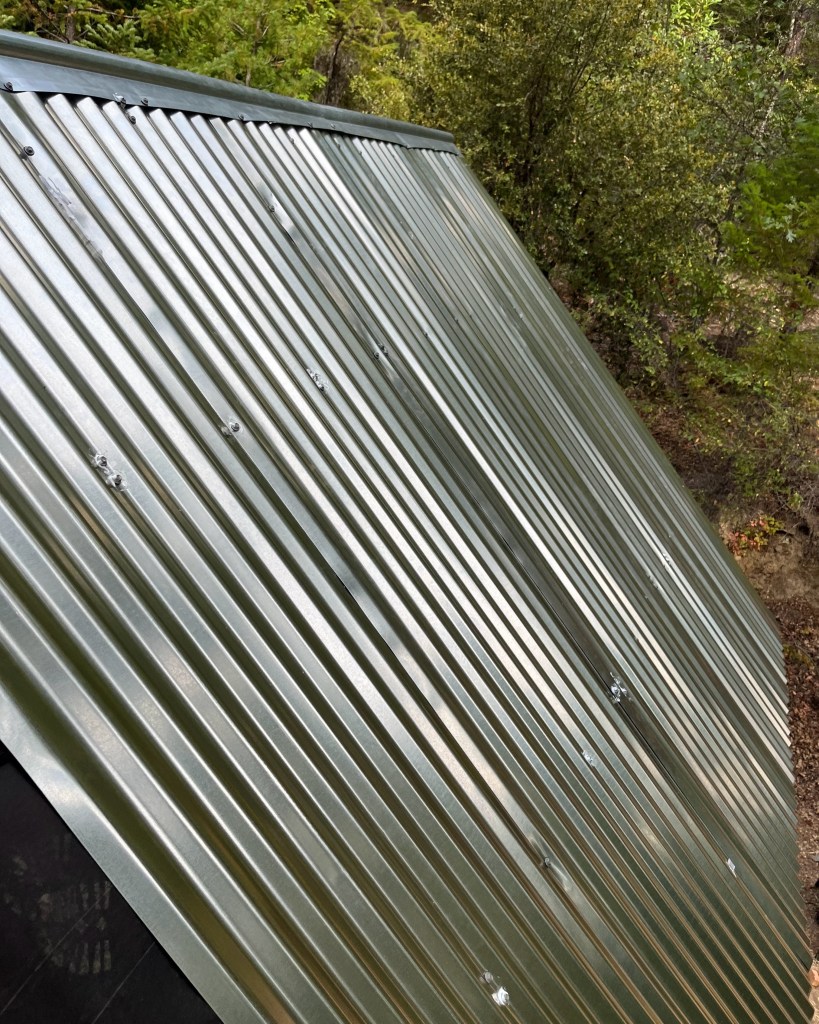
16. Layout and screw in metal roof panels. It helps to use a self-tapping screw that will go through the metal on its own. Go slow with this. We stripped a couple of the screws in the plywood.
Note: Some people run extra horizontal boards to screw the metal roof into. We elected to just fasten directly to the plywood.

17. Add on your ridge cap and screw it in. We initially used a premade ridge cap from where we got our roof panels. It ended up not overlapping enough and, frankly just did not look good. Instead, we folded a piece of metal roof hot-dog style and used it instead. It looks and functions much better.
Framing Gable Ends:
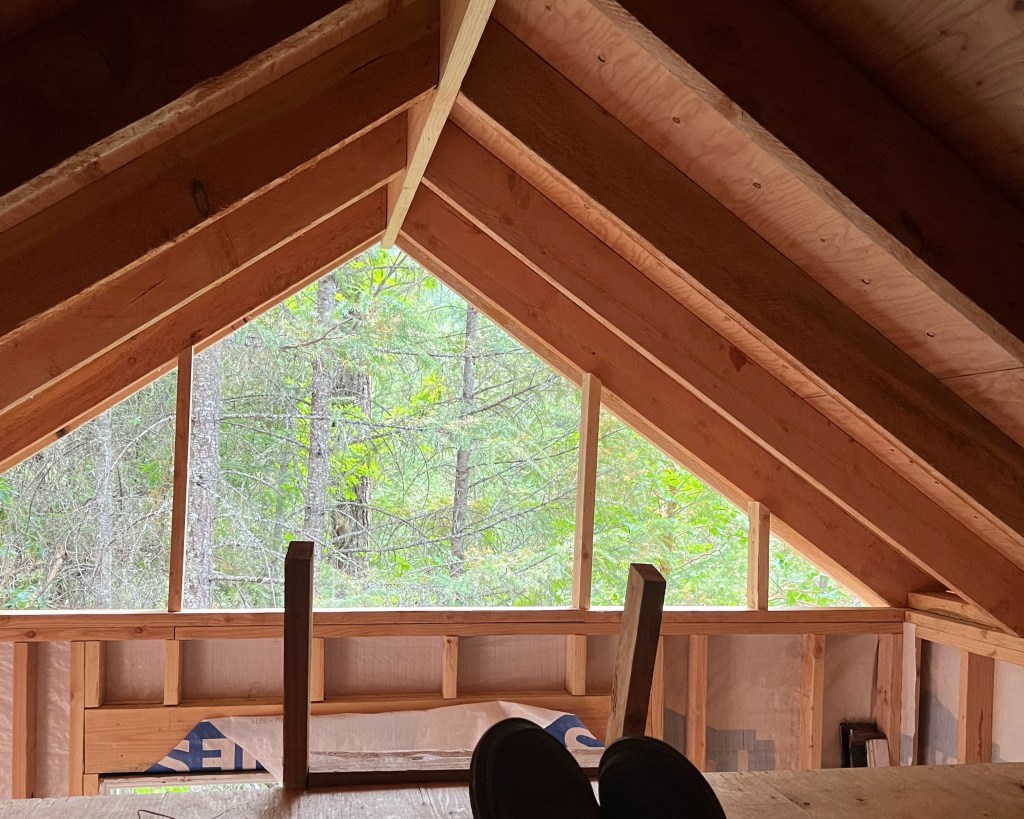
18. Add vertical studs to Frame Gable ends at least 24” OC. Measure the height needed for each stud, then use your framing square to lay out the correct angle.

19. Frame any windows in as necessary.
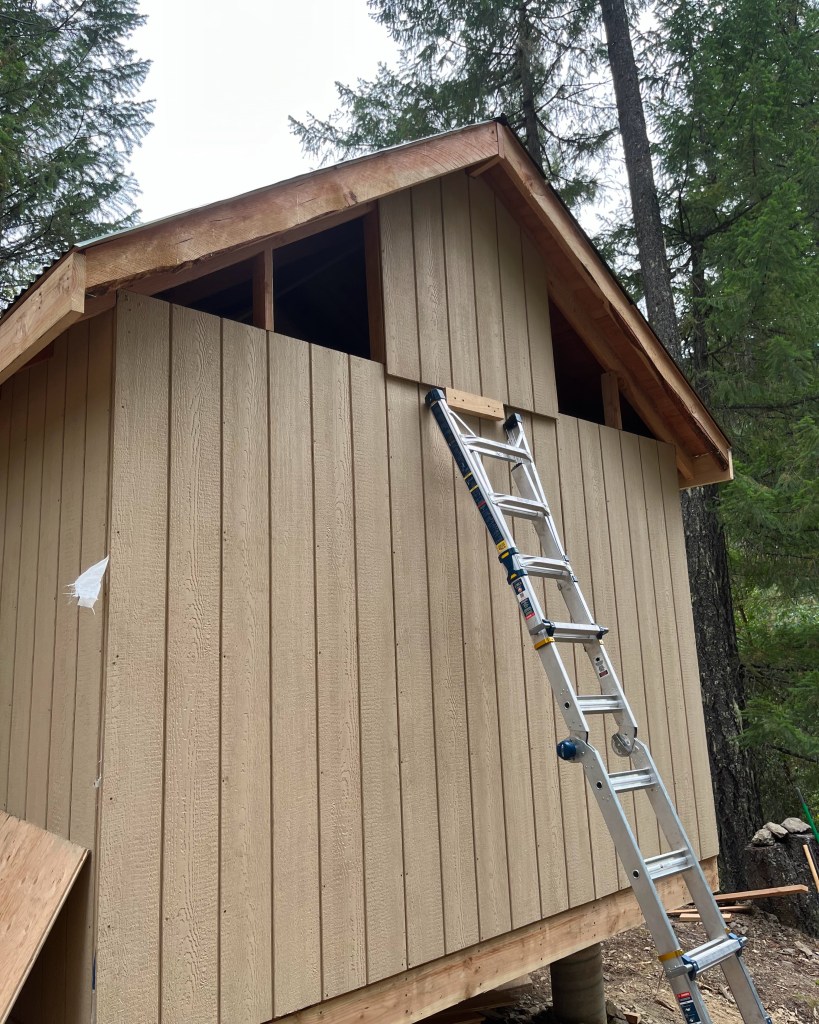
20. Sheathe the gable ends. After marking the height and width of the sheathing, you can use your chalk line to mark the angled line across your siding.

If you have followed the series of articles on the 12’x12’ cabin, your structure is now dried in. This is a huge milestone!
For free construction plans for the entire 12′ x 12′ cabin build click here. These are the plans I wish I had when I built this cabin. They have every dimension you need to build the cabin. With these plans, you can just focus on the building, with no head scratching or trying to calculate important dimensions.
 The Sufficient Natural
Leave a comment